
English| EUR
Suggested for you
More currencies
Choose a language
The temple complex visitors see on Agilkia Island today spans more than six centuries of construction. The core structures date to Egypt's Ptolemaic period, though the site's story includes an unprecedented 20th-century move that saved it from permanent submersion.
Quick answer
Philae Temple was built primarily between 380 BC and 117 AD, with construction beginning under Pharaoh Nectanebo I and continuing through the Ptolemaic dynasty and Roman period. The main Temple of Isis, the complex's centerpiece, was constructed during the reign of Ptolemy II Philadelphus around 280 BC. The temple served as an active cult center for nearly 800 years until Emperor Justinian closed it in 550 AD.
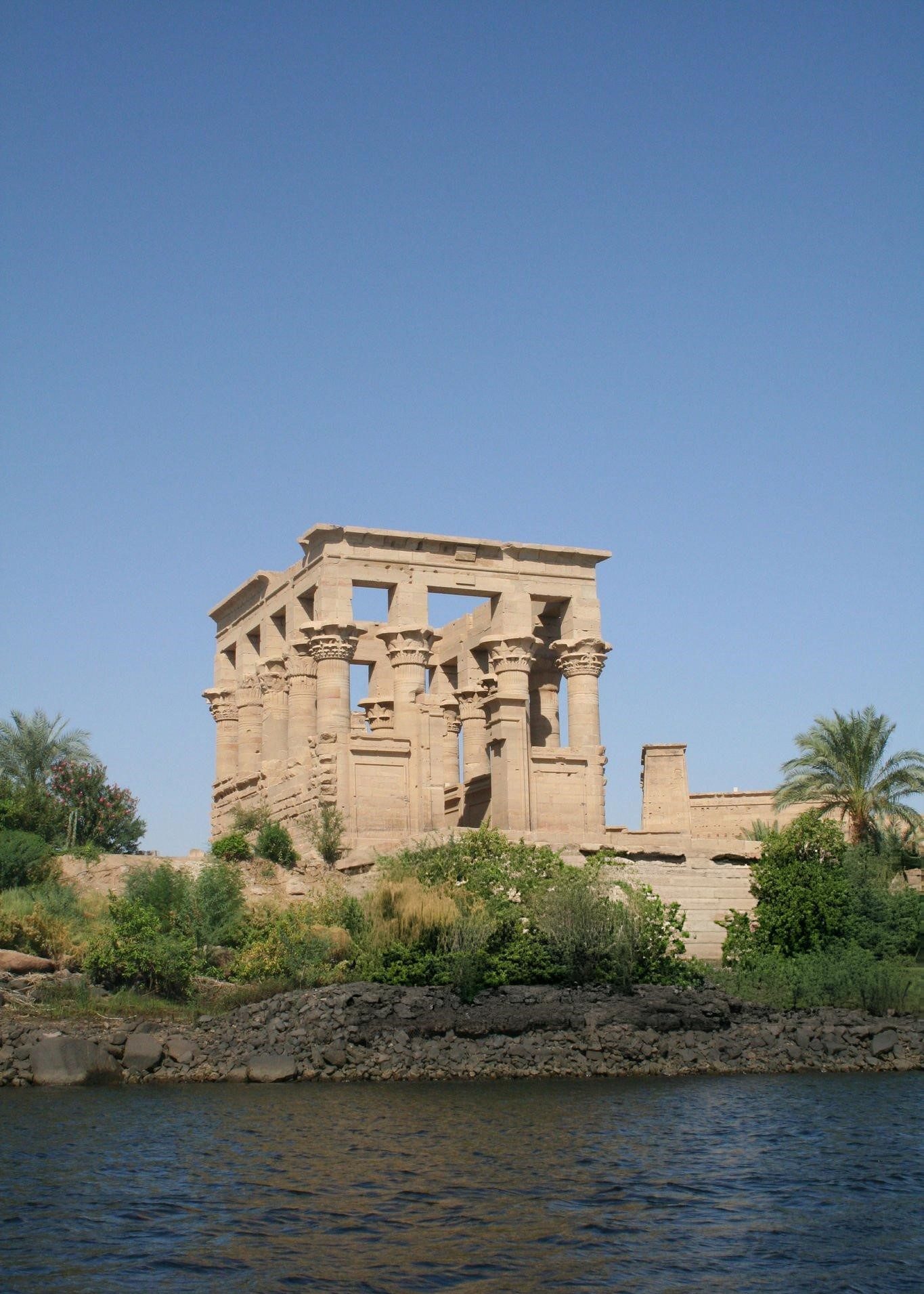
The earliest structures at Philae date to Egypt's 30th Dynasty, when Nectanebo I initiated construction around 380 BC on what was then a sacred island near the First Cataract of the Nile. The question of when was Philae Temple built has no single answer because successive rulers added to the complex for more than four centuries. Ptolemy II Philadelphus commissioned the main Temple of Isis around 280 BC, establishing the sanctuary that would become one of the last strongholds of ancient Egyptian religion. His successors added the Birth House, the elegant colonnades, and the towering First Pylon that now frames the complex's entrance. Roman emperors continued embellishing the site well into the Christian era. Augustus built the eastern colonnade, while Trajan erected the freestanding kiosk that bears his name—the structure most photographed today. The temple remained active until 550 AD, functioning as a pilgrimage destination for Nubian worshippers long after Christianity had swept through Egypt. This extended timeline explains why visitors encounter Greek inscriptions alongside hieroglyphs and why architectural styles shift across the complex. The temple's modern chapter rewrites conventional ideas about when was Philae Temple built. Between 1964 and 1968, UNESCO dismantled the entire complex—40,000 stone blocks—and reassembled it on higher ground at Agilkia Island to save it from the rising waters of Lake Nasser created by the Aswan High Dam. Engineers meticulously numbered each block, then reconstructed the temples exactly as they stood, even reshaping Agilkia's topography to match the original island. What visitors experience today is both ancient and reconstructed: 2,300-year-old stones in a 60-year-old arrangement. This dual timeline matters for your visit. The kiosk of Trajan sits where Roman engineers placed it relative to the First Pylon, but the island beneath your feet is a 20th-century creation. The sound-and-light show projected onto the temple walls each evening celebrates both the Ptolemaic builders and the modern engineers who refused to let their work drown. Understanding this layered construction history transforms a walk through the complex from a simple monument tour into a lesson in preservation as ambitious as the original construction.
“Between 1964 and 1968, UNESCO dismantled 40,000 stone blocks and reassembled Philae Temple on higher ground—a modern engineering feat as ambitious as the original Ptolemaic construction.”
The question of when was Philae temple built spans nearly eight centuries of continuous construction and modification. The earliest structures on the island date to the reign of Nectanebo I (380–362 BCE), who commissioned a kiosk and gateway during Egypt's thirtieth and final native dynasty. However, the main temple complex—dedicated to Isis—began under Ptolemy II Philadelphus around 280 BCE, marking the site's transformation into one of the most important pilgrimage destinations in the ancient world. The Ptolemaic pharaohs, Greek rulers who adopted Egyptian religious traditions, raised the First Pylon, the mammisi (birth house), and the inner sanctuaries over the next two centuries. Roman emperors continued the work after Egypt became a province in 30 BCE. Augustus added reliefs to the First Pylon and completed the western colonnade, while Tiberius, Claudius, and Trajan each contributed structures that blended Roman architectural vocabulary with Egyptian iconography. Trajan's Kiosk, built around 100 CE, remains one of the most photographed elements on the island today. Construction activity continued sporadically until the reign of Diocletian in the late third century CE, making Philae one of the last major temple projects in the pharaonic tradition. The temple remained an active cult center until 537 CE, when Justinian I ordered its closure and conversion into a Christian church. Modern visitors encounter a second construction story: the temple's relocation. Between 1972 and 1980, UNESCO dismantled and moved every structure from the original Philae Island—submerged after the Aswan Low Dam—to higher ground on Agilkia Island. Engineers cut 40,000 stone blocks and reassembled them with millimeter precision. The hypostyle hall, the colonnades, and the nilometers now stand exactly as they did in antiquity, their carvings of Ptolemaic kings and Roman emperors still legible after two millennia and one carefully executed migration.
Nectanebo I constructs the earliest kiosk and gateway on Philae Island during Egypt's thirtieth dynasty.
Ptolemy II Philadelphus begins construction of the main Isis temple, including the First Pylon and inner sanctuaries.
Successive Ptolemaic rulers expand the complex with colonnades, the mammisi, and additional chapels dedicated to Isis and Horus.
Augustus completes the western colonnade and adds reliefs to the First Pylon following Rome's annexation of Egypt.
Trajan builds the iconic unfinished kiosk on the eastern side of the island, blending Roman columns with Egyptian capitals.
Emperor Justinian I orders the closure of the temple and its conversion into a Christian church, ending a millennium of active worship.
UNESCO relocates the entire complex stone by stone from the submerged original island to Agilkia Island, 500 meters away.
Philae Temple is open to visitors daily, maintaining consistent operating hours throughout the week.
The conservation fee for entry to Philae Temple is standardized for international visitors. Please note that this fee covers site access only and does not include the required boat transfer to Agilkia Island.
Verdict: A typical foreign adult pays 550 EGP for the conservation fee, with the total cost varying based on the independent boat transfer rate.
Philae Temple is located on Agilkia Island in Aswan, accessible only by water. Visitors must travel to the dedicated marina on the mainland to board a local boat for the final leg of the journey.
Travel to Philae Temple Marina, Shellal
Drive via Aswan-Abu Simbel Road to the Marina parking area
Board at Philae Temple Marina for transit to Agilkia Island
Secure your boat transport at the official marina ticket office upon arrival. Plan to reach the marina between 07:00 and 09:00 to minimize wait times and avoid peak crowd congestion.
Everything you need to know about when was philae temple built
The primary structures of the Philae Temple complex were constructed during the Ptolemaic Kingdom, primarily between 380 BC and 100 AD. While earlier structures existed, the iconic temple we see today dates largely to this Greco-Roman period when was philae temple built.
This sanctuary was dedicated to the goddess Isis and serves as a significant UNESCO World Heritage site in Aswan. Its location was shifted to Agilkia Island during a major international rescue project to save it from the rising waters of the Nile following the High Dam construction.
The entrance fee is 550 EGP for foreign adults. This is a conservation fee that supports the ongoing maintenance of the site.
The site is open daily from 07:00 to 16:00. This schedule applies throughout the entire week, including weekends.
The best arrival window is between 07:00 and 09:00 to avoid mid-day heat and large groups from cruise ships. Many visitors find that arriving early allows for a more peaceful experience when considering when was philae temple built.
The entrance fee does not include the boat transfer required to reach the island. You will need to arrange your water transport separately, which is a common logistical step when visiting this Aswan landmark.
The architecture represents a blend of ancient Egyptian and Greco-Roman styles, showcasing the cultural transitions of the era when was philae temple built. Builders worked in phases over several centuries to complete the various pylons, hypostyle halls, and colonnades found on the site.
Philae Temple and Nubian Village Tour
Read more Tickets & toursPhilae Temple Private Tour
Read more GuidePhilae Temple Self-Guided Visit
Read more Tickets & toursPhilae Temple Group Tour
Read more Tickets & toursPhilae Temple Tours from Aswan
Read more Tickets & toursPhilae Temple Night Tour
Read more GuidePhilae Temple Entrance Fee & Opening Hours
Read more